
Writing exists to get your idea across, and overlong AI output doesn't.
So we wrote an AI writing policy for everyone at Hiflylabs who writes with AI for human readers.
Substance first: think, then review
Own every sentence
“AI wrote that” is never an answer to “What did you mean by this part?”
Writing is thinking
Skip the thinking and you get a result with no intent behind it.
Label AI ideas
Saying “Claude suggested this” is okay.
AI rewrites can shift your meaning
AI touch-ups are fine if you check every change. But if you don’t, and the output takes longer to read than you spent writing the prompt: just send over your prompt. Reviewers would like to see your original intention.
Writing for clients?
1.) Make your main point clear and concise.
2.) Speak the audience’s language.
Before prompting, answer:
Who is this for? What do they get out of it? What’s their next step?
Check the output against those answers before anyone else sees it.
Style second
Plenty of prompts and humanizer skills promise to remove AI tells, and they're fine for a style pass. But a "make it sound human" prompt is not a review, and no style fix replaces thinking before you prompt.
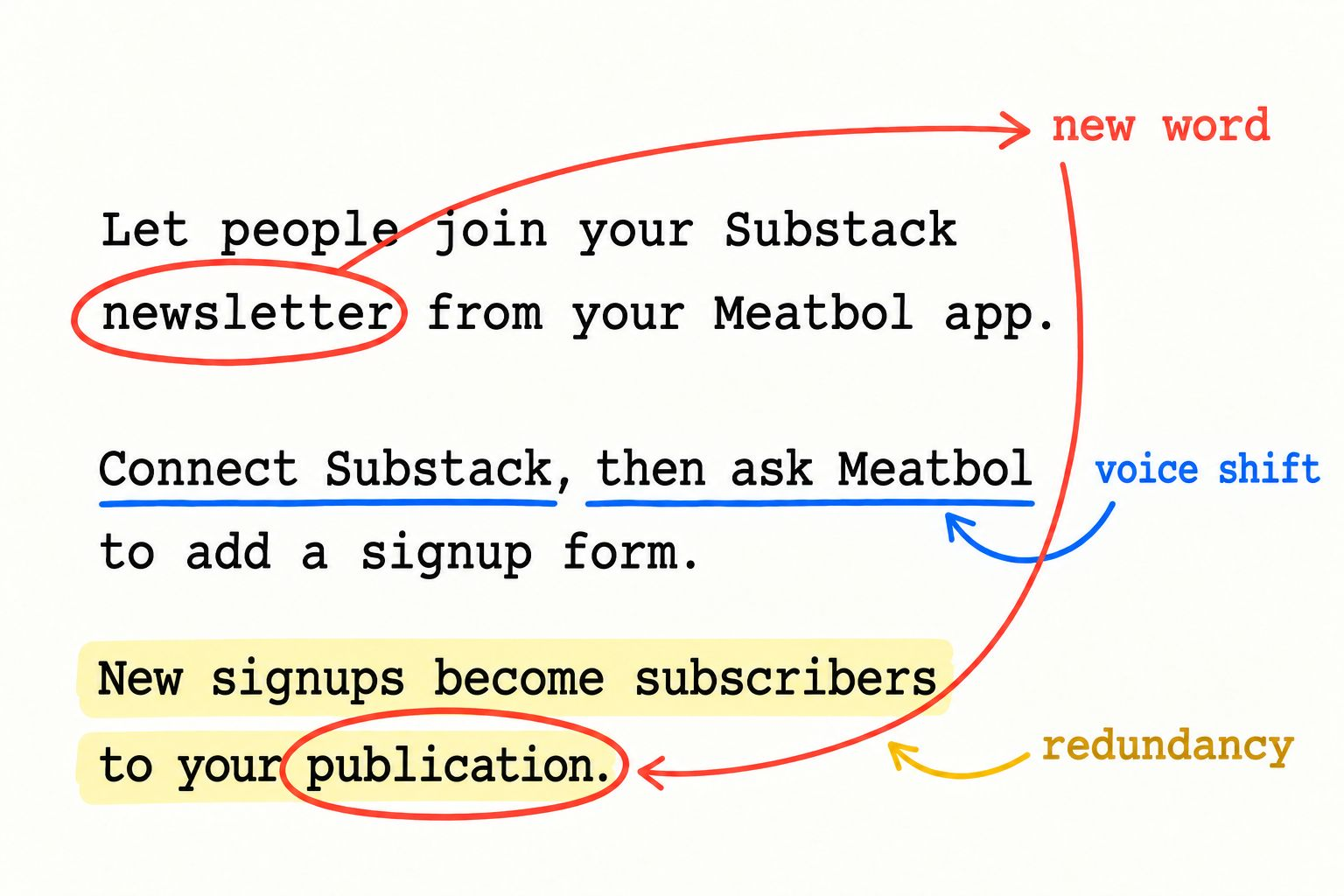
Image source: Illustration originally shared by Talia Moyal on Linkedin.
The example shows some less obvious AI tells:
- Keep one perspective throughout. Don't shift voice mid-paragraph.
- Use one keyword per concept, and list your key terms before you prompt. If repetition bothers you, restructure the sentence around the keyword instead of swapping in a synonym.
- Requirement: Make a list of terminologies before you prompt.
- Don't explain the obvious result of an action.
- Look for repeated meaning, not just repeated words.
- If a transition feels awkward, the next sentence may not need to exist.
Heads-up: Only removing the surface-level tells won’t make text undetectable. Claude, for example, leaves a “digital watermark” of statistical wording patterns as well. If it mustn’t read as AI, know the red flags by heart and rewrite every sentence (or skip AI).
Why write anything, when AI can even write code now?
Code has testable answers. Good writing depends on how your audience feels when they read it, and a model can't interview your ideal customer to find out what moves them. The statistically likely answer usually won't.
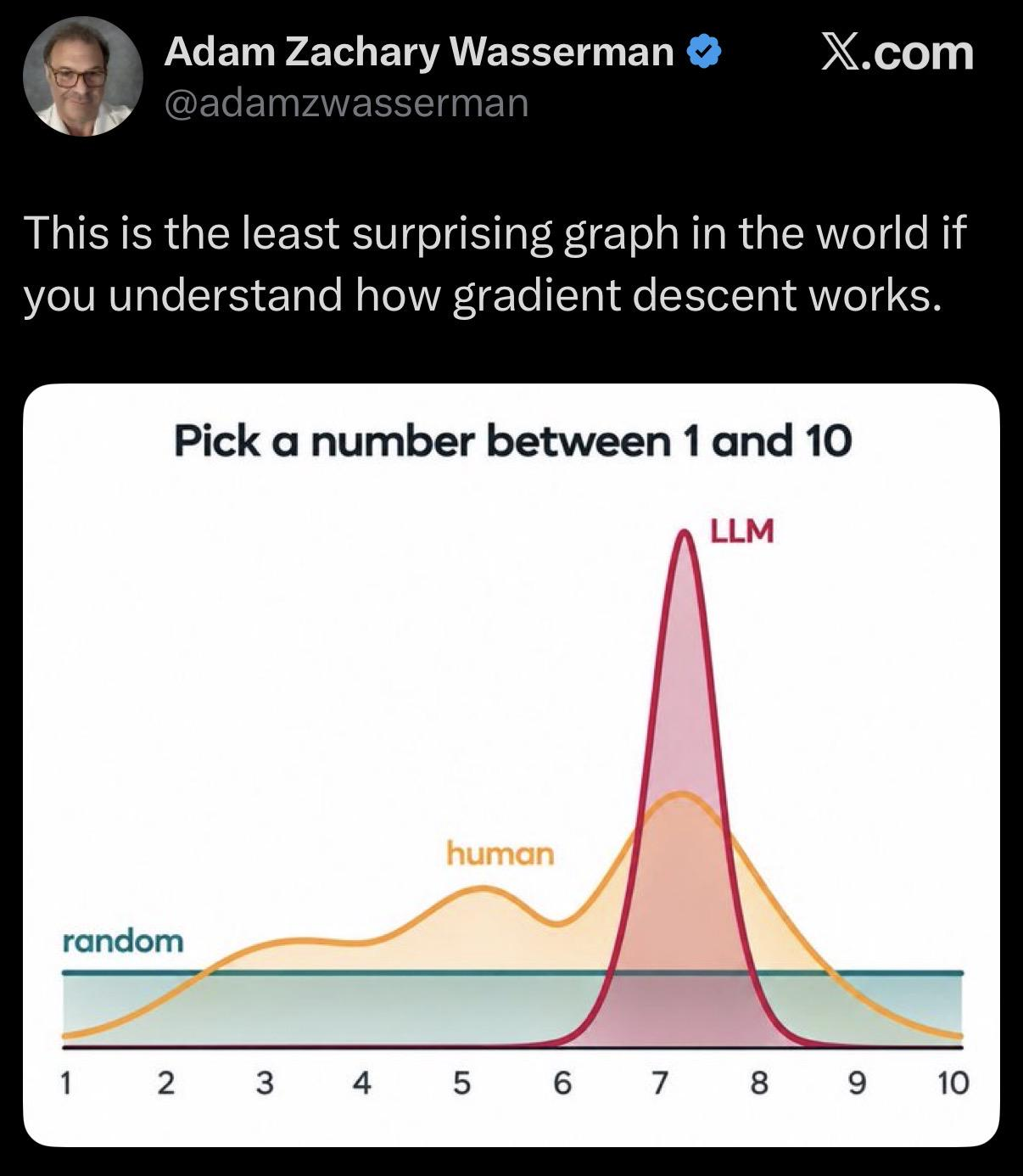
Image source: Chart shared by Adam Zachary Wasserman on X.
Remember this:
Getting the right information to the right audience comes first. Style comes second.